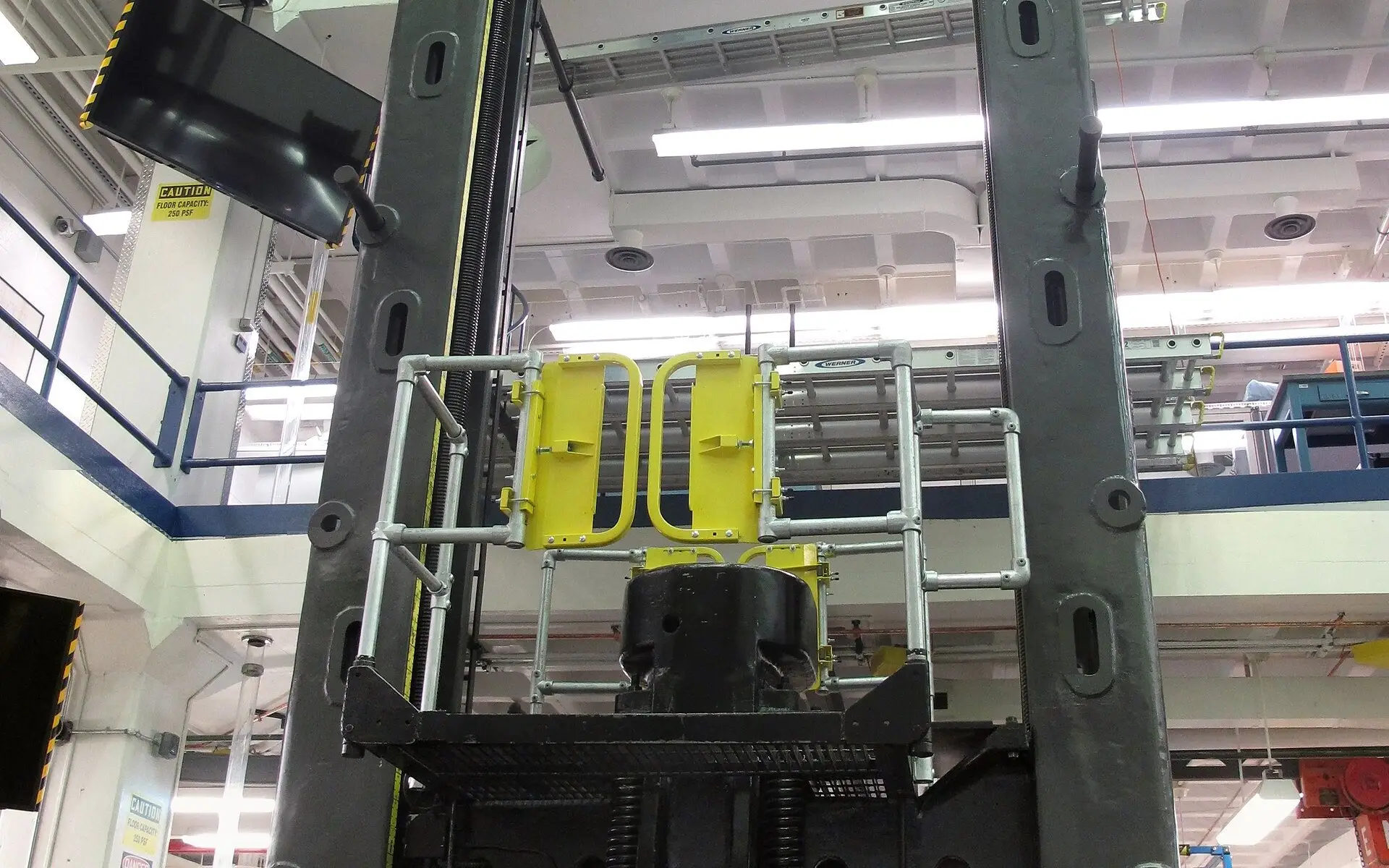
Sanjay Kumar Khurana, an orthopaedic spine surgeon in Marina del Rey and Santa Monica, was issued a United States patent in 2017 covering a protective cover that is used with a spinal implant, a reminder that implants are engineered objects as well as surgical tools. Engineering of that kind is judged in testing laboratories. Picture a simulator in a quiet lab at night, its stations rocking test parts back and forth in a bath of fluid once every second, a rhythm that will continue around the clock for weeks.
Why implants are tested before use
Testing houses exist so that a weakness shows up on a machine rather than in the body. the testing laboratory EndoLab1, describes more than 25 years of work on hips, knees, small joints, spinal devices, dental and vascular implants, and instruments. It tests against more than 200 international standards, plus methods it writes for unusual devices, and supports every phase from early prototypes to regulatory submissions.
Its menu shows the main questions. Fatigue tests ask whether a device survives repeated loading. Wear tests measure how much material rubs away. Corrosion tests look at how metal reacts with body fluid, and particle and ion release tests check what the implant sheds into surrounding tissue1.
A standard for spinal implant assemblies
For spinal implants, one widely used reference is ASTM F1717. According to testing machine maker ADMET2, the standard exists to give a common basis for comparing past, present and future spinal implant assemblies, so that a new design can be measured against older ones on the same terms.
F1717 sets out three static tests and one fatigue test. The static tests are compression bending, tension bending and torsion, and the fatigue test repeats compression bending many times. In the bending tests the machine pushes or pulls at no more than 25 millimetres a minute while recording load against displacement; in torsion it twists at no more than 60 degrees a minute and records torque against angle2. From those curves engineers calculate stiffness, the load at which the assembly yields, and its ultimate load.
How a fatigue test is run
The fatigue portion is the slow part. The machine applies a smooth, repeating sinusoidal load, at a frequency no higher than 5 cycles a second, with a fixed ratio between the highest and lowest load in each cycle2. Two specimens start at chosen loads, and the laboratory looks for the run out load, the highest load at which no specimen breaks before 5 million cycles.
Testing continues in pairs, bracketing that level, until the gap between a load that breaks a specimen and the run out load is within 10 percent of the static ultimate bending load. The result is a map of how much repeated force an assembly tolerates, not a single pass or fail mark.
- 1Static tests first Compression bending, tension bending and torsion establish stiffness and ultimate load
- 2Start the fatigue run Two specimens are cycled with a smooth repeating load at no more than 5 cycles a second
- 3Count to 5 million A load at which no specimen breaks before 5 million cycles counts as a run out
- 4Test in pairs Further pairs bracket the run out level from above and below
- 5Close the gap Testing stops when breaking load and run out load differ by no more than 10 percent of ultimate load
Wear simulators for hip, knee and spine
Wear testing reproduces motion instead of one fixed load. Element, an international testing company3, runs hip implants under ISO 14242 part 3, submerged in a bovine fluid inside an environmental chamber, at one cycle per second for up to 5,000,000 cycles. The parts are weighed periodically, typically seven times in a test, and each station rocks the joint through a 23 degree biaxial motion that imitates walking. Knees are tested under ISO 14243, controlled either by force or by displacement.
Spinal implants have their own standards, ASTM F2423 and ISO 18192. Element uses a six station spine wear simulator offering six degrees of freedom, with load and soak control3. At one cycle a second, five million cycles take almost two months of continuous running, and Element puts a typical wear programme at four to six months.
| Covers | What the machine does | |
|---|---|---|
| ASTM F1717 | Spinal implant assemblies | Static bending, torsion and cyclic compression bending |
| ASTM F2423 and ISO 18192 | Spinal implant wear | Six station simulator with six degrees of freedom |
| ISO 14242 part 3 | Hip implant wear | Walking motion at one cycle a second in bovine fluid |
| ISO 14243 parts 1 and 3 | Knee implant wear | Gait motion under force or displacement control |
Debris, corrosion and new material pairs
The debris a part sheds is as telling as the amount lost. Element examines the worn surfaces and the debris with scanning electron microscopy and energy dispersive spectroscopy, which together reveal the shape, size and chemistry of the particles3. EndoLab adds tests of corrosion and of fretting corrosion, for implants built from several modular parts as well as for single piece designs1.
Regulators use wear testing as a gatekeeper. Element notes that the FDA and other agencies often ask for it when a device introduces a new material couple, meaning a pair of surfaces whose wear has not been characterized, and that laboratories commonly test a new device alongside an earlier one3.
Coatings judged in the laboratory
Surfaces are tested too. In 1997 New Scientist reported4 on a coating method from William Lacefield of the University of Alabama at Birmingham and Dwain Coble of the University of Alabama in Huntsville. The usual plasma spray of hydroxyapatite, the calcium phosphate mineral that makes up about 65 percent of natural bone, coats corners unevenly and leaves less stable compounds behind.
The new process placed a titanium implant in an electrolytic bath as one electrode, yielding a coating of up to 70 percent hydroxyapatite. Its evidence was entirely laboratory based: corrosion, durability and bond strength tests that Lacefield called promising4.
“You end up with some amorphous material, which is more dissolvable”William Lacefield, University of Alabama at Birmingham, in New Scientist, New Scientist
Harder materials on the bench
New materials begin with bench measurements. In 2016 the BBC reported5 that a team led by Emilia Morosan at Rice University had made beta Ti3Au, an alloy of titanium and gold four times harder than pure titanium, and found it only because it was too hard to grind in a diamond coated mortar. In 2001, Technology Review described6 alumina and zirconia composites from the National Institute for Applied Sciences in Lyon that resisted crack growth and carried twice the load of either ceramic alone, with human testing not due until late 2002.
What a test can and cannot predict
Bench testing is good at comparison. It shows whether a design is stiffer, harder or more resistant to wear than its predecessor, under conditions any laboratory can repeat. ADMET states plainly that F1717 uses simplified loading and does not try to copy the complex loads of the real spine2.
That limit runs through the whole field. Coatings and alloys that excel in the laboratory still need clinical study, and when Australian researchers announced a new class of 3D printed titanium alloys in 2023, The Guardian noted7 that they were still some way from use in biomedical implants. A test predicts how a part behaves under the conditions it reproduces, and nothing beyond them. More on the materials appears in The Metals of Medicine, on design ownership in medical device patents, and on one kind of spinal implant under artificial disc replacement.
Sources cited
- Implant Testing | EndoLab , Medical Implant Testing. EndoLab, 2024.
- ASTM F1717 Spinal Implant Testing | ADMET. ADMET, 2025.
- Wear Testing of Medical Devices | Element. Element.
- Technology : Compatible coat gives implants longer life | New Scientist. New Scientist, 1997.
- New alloy 'four times harder than titanium'. BBC, 2016.
- Beyond Hip. MIT Technology Review, 2001.
- Australian scientists create new class of titanium alloys. The Guardian, 2023.
Selected outlets
- EndoLabImplant Testing | EndoLab , Medical Implant Testing
- ADMETASTM F1717 Spinal Implant Testing | ADMET
- ElementWear Testing of Medical Devices | Element
- New ScientistTechnology : Compatible coat gives implants longer life | New Scientist
- BBCNew alloy 'four times harder than titanium'
- MIT Technology ReviewBeyond Hip
Nearby entries
- 01
Medical Device Patents
Four centuries of patents, what a medical invention can protect, and why a granted design is not yet a product.
- 02
Artificial Disc Replacement
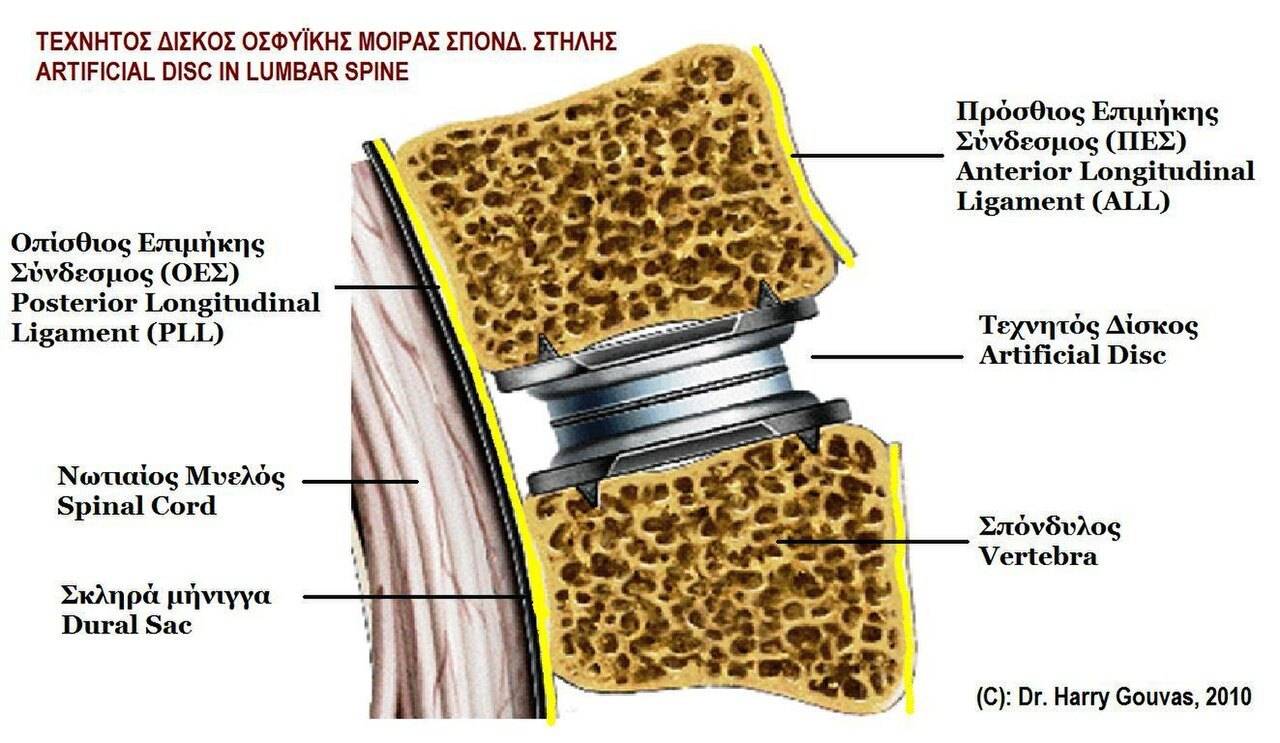
An engineered joint takes the place of a worn intervertebral disc and is designed to let that segment keep bending.
- 03
How the Human Spine Evolved
Fossils, chimpanzees and ancient scribes show how walking on two legs bent the backbone into curves.


