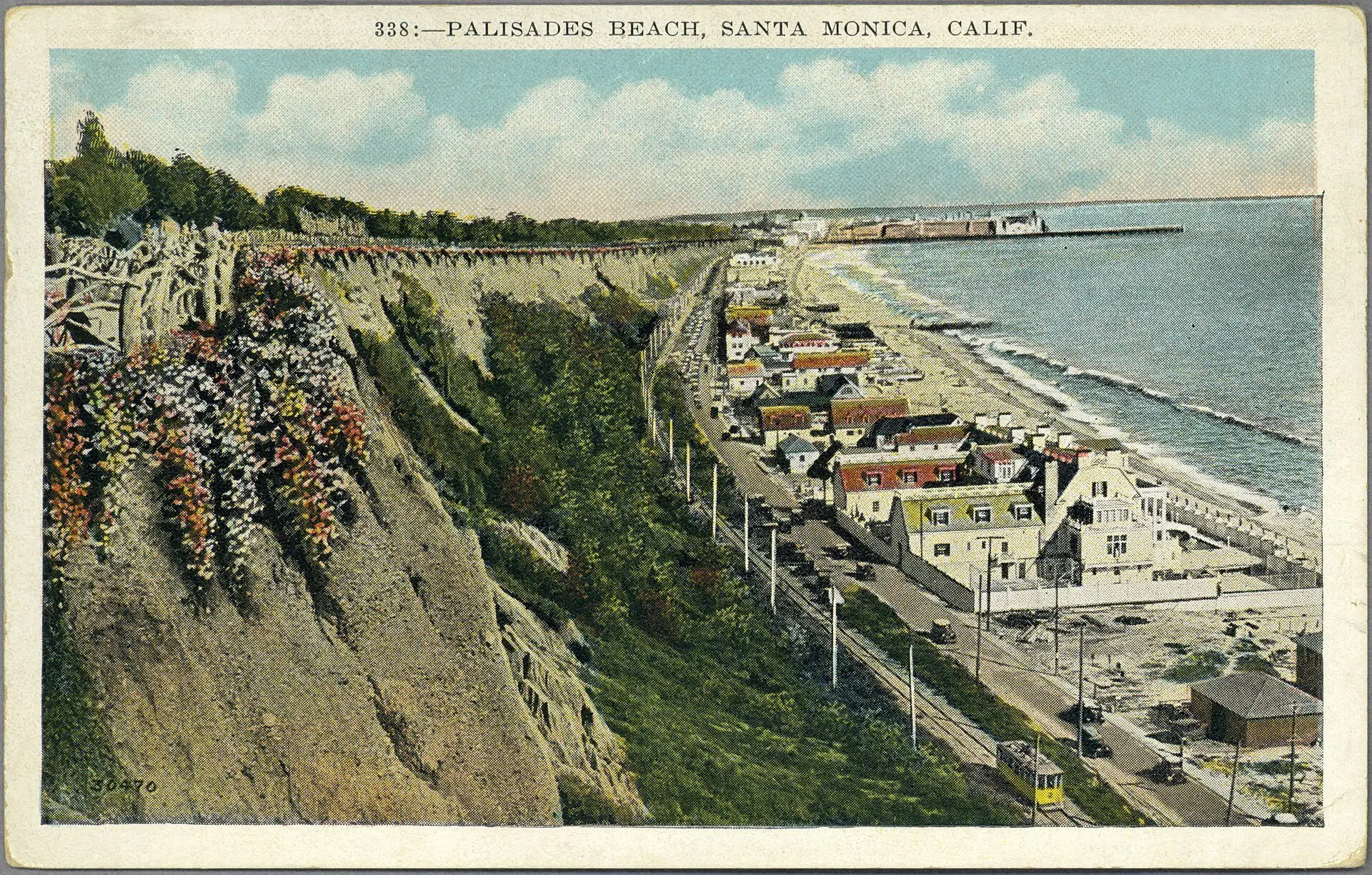
Santa Monica, the beach city where Sanjay Kumar Khurana practices along with neighboring Marina del Rey, marked the hundredth year of Route 66 in November 2026 with an exhibition at its history museum. Creating Route 66: Road, Legend, Community uses historic photographs and objects to show how the highway shaped landscapes and communities along its path, and it runs from November 12 until June 27, 2027, the Santa Monica Daily Press reported1. The subject is local: the road ends in Santa Monica.
An exhibition for a highway's hundredth year
The show, curated by Anne Wallentine and Avehi Menon, is arranged in six sections1. It begins with the road's origins, including the Indigenous trails that shaped its route, then turns to the people who traveled it: Dust Bowl migrants, Black motorists who relied on the Green Book to get through segregation, and women whose work shaped the highway. Later sections follow the road through books, film and music, from a first edition of The Grapes of Wrath to the Pixar film Cars, and explain its meaning for Santa Monica, known as the End of the Trail1.
The end point is itself a fine point of geography. A 2024 Los Angeles Times guide to the city2 notes that an End of the Trail marker stands on the pier, though the decommissioned highway technically ended at the corner of Lincoln and Olympic boulevards.
The Tongva and the land before the town
Long before the highway, the land was Tongva land. In 2018 the museum opened People of the Earth: Life and Culture of the Tongva, an exhibit of artifacts, images, video and interactive displays about the people its archivist Sara Crown called the city's original residents, the Daily Press reported3. Crown said the Tongva had managed the land for thousands of years while keeping its natural resources in balance, and she hoped visitors would learn what had made them nearly invisible3.
The Tongva remain part of the city's life. The paper credited them with contributions including Tongva Park, the Chia Café Collective, a Native group that restores native plant communities, and the preservation of Kuruvungna Springs at University High School3.
“Native people are here and thriving.”Sara Crown, archivist of the Santa Monica History Museum, 2018, Santa Monica Daily Press
A spring, a saint and the first landowners
The city takes its name from a local spring, Las Lágrimas de Santa Monica, the Tears of Saint Monica, Britannica notes4. Spanish families held land here before any town existed. At the opening of the city's first history museum in 1988, the society member Ysidro Reyes said his grandfather had been one of the area's original Spanish landowners in 1838, and recalled a time when about 3,500 people lived in the whole area5. The society's president, Andrew Calkins Carrillo, also descended from early Spanish settlers5.
A resort town laid out in 1875
Senator John P. Jones laid out the town in 1875 and promoted it as an ocean resort and as the port terminus of a railroad planned to run from Los Angeles to Independence4. San Pedro won the contest to be the region's port, but Santa Monica prospered as a place to live and vacation, and it was incorporated in 1886. Britannica gives its population as 84,084 in 2000 and 89,736 in 2010, in a city on Santa Monica Bay surrounded by Los Angeles4. The Times guide measures it at roughly 8.3 square miles2.
- 1838Ysidro Reyes's grandfather is among the area's Spanish landowners
- 1875Senator John P. Jones lays out the town
- 1886Santa Monica is incorporated
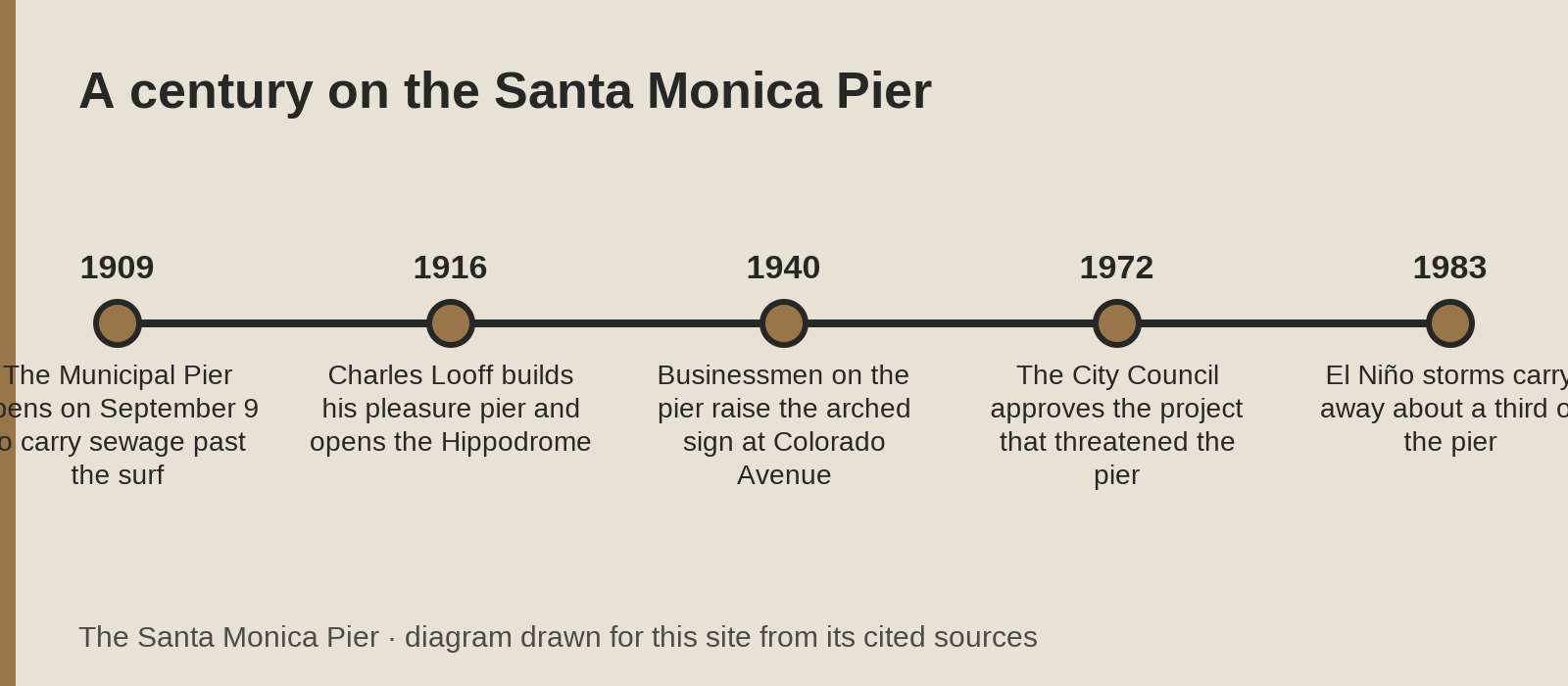
- 1909The pier opens
- 1920Donald Douglas starts an aircraft company in the city
- 1929Santa Monica Junior College opens with 153 students
- 1975The Santa Monica Historical Society is founded during the centennial
- 1988The society's museum opens on Colorado Avenue
The pier and the beach
The pier, built in 1909, holds restaurants, shops, an aquarium and a classic carousel, and the city is also known for its beaches, galleries and theaters4. The Times guide compares the pier to the Empire State Building as the single landmark that stands for a place, and estimates that it draws 10 million tourists a year, some to ride the solar powered Ferris wheel and some to finish a pilgrimage along Route 662. The wooden structure runs 1,651 feet into the Pacific2.
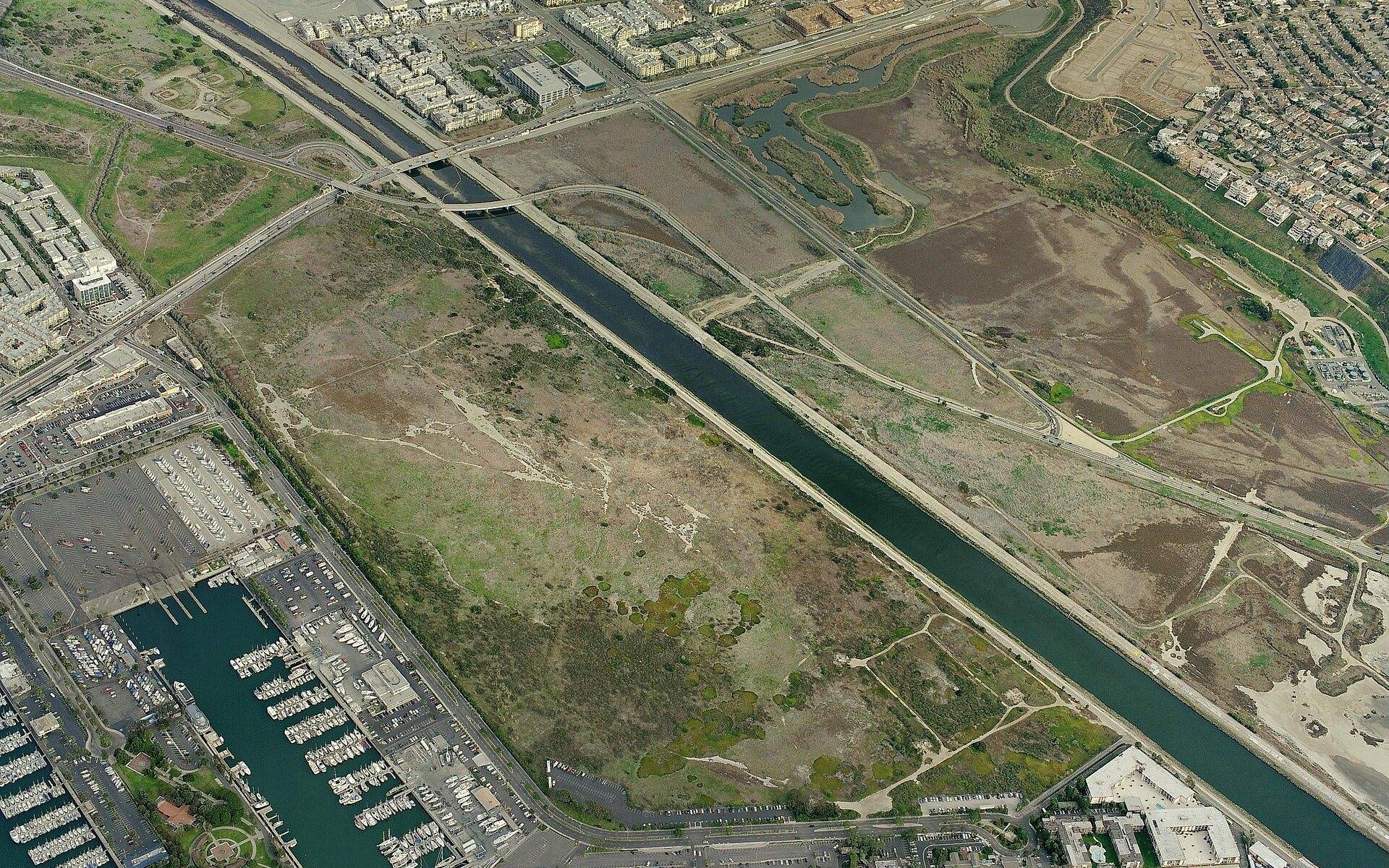
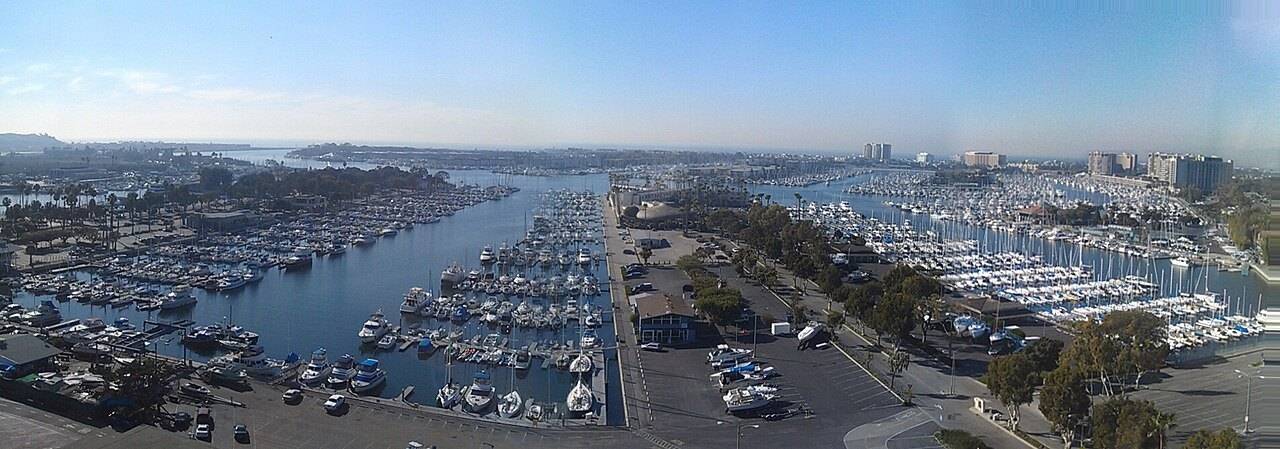
Its own history is told in the entry on the Santa Monica Pier. Down the coast, Marina del Rey Harbor and Ballona Creek and its wetlands have entries of their own.
Where aviation history began
Santa Monica was an early center of flight. An aircraft company Donald Douglas established in the city in 1920 was the forerunner of its modern aerospace and communications industries, Britannica says, and the Museum of Flying displays vintage aircraft4. The Times guide makes the same point in its own way, observing that the city at the end of the Mother Road also stood at the start of aviation history2.
A college that opened with 153 students
Santa Monica Junior College opened on September 10, 1929, on the second floor of Santa Monica High School with 153 students, according to a Daily Press chronology6. It moved to an old brick building at the Garfield School site, but the 1933 earthquake left that building unusable, and classes went on in tents and bungalows nicknamed Splinterville. The present main campus on Pico Boulevard opened in 19526.
The college kept adding programs: the Emeritus College for older adults in 1975, a first satellite campus at Santa Monica Airport in 1988 and an Academy of Entertainment and Technology in 19986. The Northridge earthquake of January 1994 hit the campus hard6.
A museum born from the centennial
The museum behind the Route 66 show grew out of the city's hundredth birthday. After a local history exhibition at the Civic Auditorium during the 1975 centennial, residents held the founding meeting of the Santa Monica Historical Society on October 8, 1975, at the public library, with Clo Hoover, the city's first woman mayor, as its first president7. For a decade its collection grew from objects and photographs given by descendants of land grantees and pioneers7.
Louise Gabriel and her husband, Bob, spent three years raising support and gathering donated furnishings, and the museum opened in 1988 in a temporary space on Colorado Avenue lent without rent7. Its first displays ranged from a stone corn grinder to 1920s flapper dresses and photographs of entertainers who had lived in the city, such as Shirley Temple, the Los Angeles Times reported5. After several moves it settled in 2009 beside the Main Library, and it now holds more than six hundred thousand photographs7.
| People of the Earth | Creating Route 66 | |
|---|---|---|
| Opened | February 9, 2018 | November 12, 2026 |
| Closes | May 5, 2018 | June 27, 2027 |
| Subject | Tongva life and culture | The highway and its communities |
| On show | Tongva artifacts, images and video | A first edition of The Grapes of Wrath and roadside signs |
How the city measures its own wellbeing
In 2013 the city won a Bloomberg Philanthropies innovation prize to build an index of residents' wellbeing, something no city had done before, one of the officials behind it, Julie Rusk, wrote in the Guardian8. The team combined city data on crime, transit, libraries, parks and employment with a survey that asked residents about sleep, exercise, money worries, whether people smiled at them on the street and how much fruit they ate, then analyzed posts on Twitter. The first index appeared in April 20158.
The answers were mixed. Most residents were satisfied with their lives and knew they lived somewhere beautiful, yet a third felt stressed all or most of the time; 56 percent said they could count on neighbors, against 80 percent in national surveys; and only a quarter ate five servings of fruit and vegetables a day in a city proud of its farmers markets8. Together with the museum's exhibitions, the index gives the city two ways of telling its own story, one in objects and photographs, the other in what its residents say about their days.
Sources cited
- Route 66 Centennial Exhibition Opens in Santa Monica. Santa Monica Daily Press, 2026.
- This must be Santa Monica. Los Angeles Times, 2024.
- Santa Monica History Museum to showcase indigenous Tongva. Santa Monica Daily Press, 2018.
- Santa Monica | California, Map, & History | Britannica. Encyclopaedia Britannica, 1998.
- Santa Monica History Museum: From Indians to Shirley Temple. Los Angeles Times, 1988.
- Key dates in Santa Monica College history. Santa Monica Daily Press, 2004.
- About Us Santa Monica History Museum. Santa Monica History Museum, 2011.
- How Santa Monica became the first city to measure its residents. The Guardian, 2015.
Selected outlets
- Santa Monica Daily PressRoute 66 Centennial Exhibition Opens in Santa Monica
- Los Angeles TimesThis must be Santa Monica
- Encyclopaedia BritannicaSanta Monica | California, Map, & History | Britannica
- Santa Monica History MuseumAbout Us Santa Monica History Museum
- The GuardianHow Santa Monica became the first city to measure its residents
Nearby entries
- 01
The Santa Monica Pier
Two joined piers, a carousel, a neon arch and a century of storms and rescues.
- 02
Ballona Creek and Wetlands
A wandering stream, a muddy racing pond and the salt marsh left beside the harbor.
- 03
Marina del Rey Harbor
From an estuary of duck hunters to thousands of boat slips, and an argument over size.


