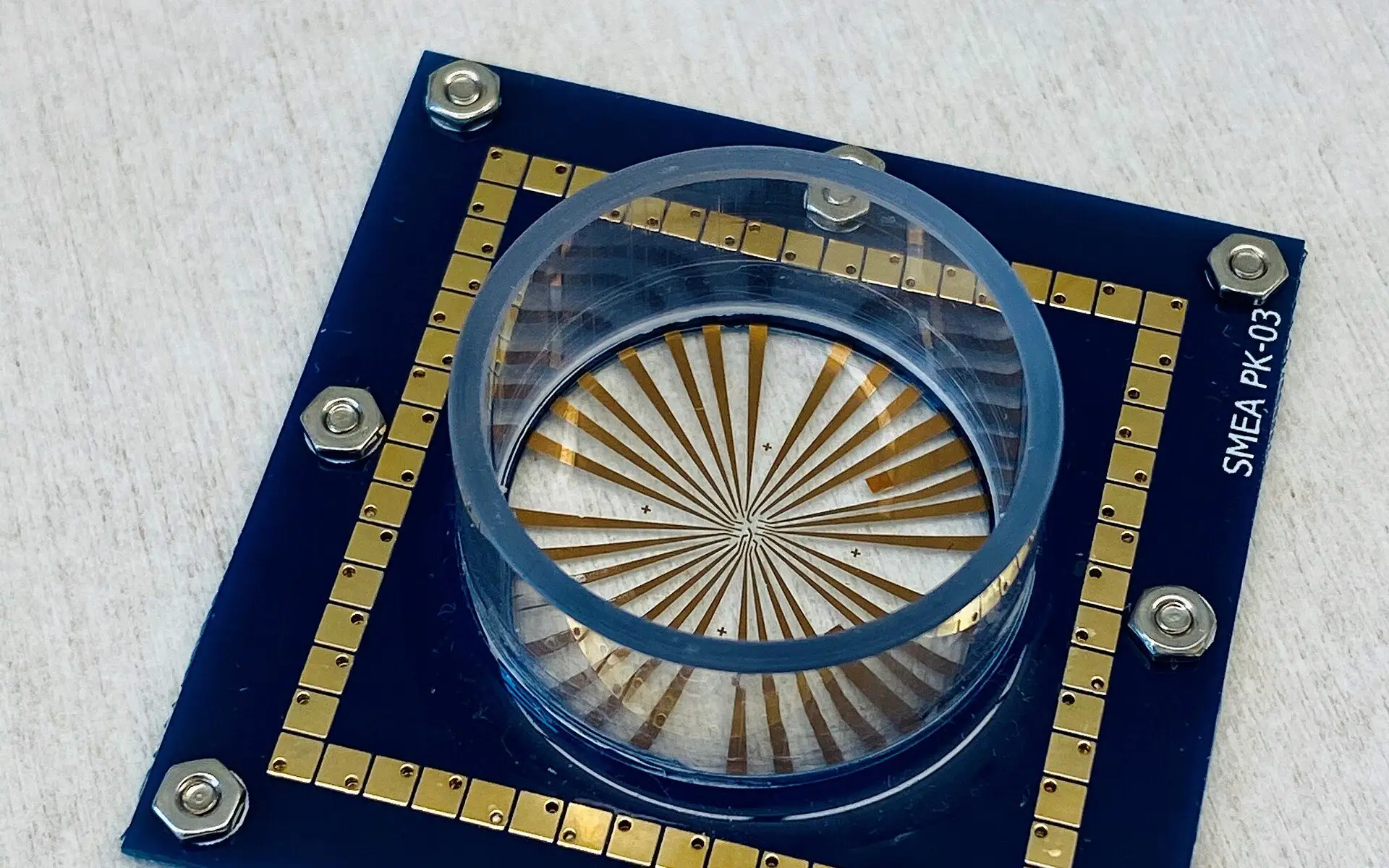
Sanjay Kumar Khurana lists cervical spine disorders and spinal trauma among his clinical interests, and an injured cord is exactly the gap that a brain to spine interface is built to cross. In November 2016 a team in Switzerland reported that monkeys with one leg paralyzed by spinal cord damage had quickly walked again using a wireless connection running from the brain to the cord below the injury1. The idea behind the experiment is simple to state and hard to build. If the command to move still forms in the brain, and the circuits that carry out walking still sit intact below the damage, a machine might carry the message across.
A wireless bridge in primates
The New York Times report on the 2016 study1 singled out two features. The system worked on the lower body, where most earlier brain control research had focused on hands and robotic arms, and it let the animal move freely rather than stay tethered to a computer. A microelectrode array in the motor cortex picked up the spiking activity of neurons, a computer decoded those signals, and stimulation delivered to the cord below the injury turned them into steps. The report placed the work in a fast moving field: scientists had already given monkeys and people brain control of robotic hands, restored some hand use to a paralyzed man through a chip in his brain, and used nerve stimulation to make paralyzed rats walk1. Grégoire Courtine, the Lausanne specialist in spinal cord repair who led the work, said he hoped the approach could reach human therapy within ten years. The first human report came seven years later.
Reading intention in the motor cortex
The decoding half has a longer history. A 2016 essay in The Conversation2 traced it to a 2002 finding that monkeys could move a computer cursor by thought alone, which was followed by electrode devices such as the Utah array implanted just below the skull in people. The BrainGate team, led by the neuroscientist John Donoghue of Brown University, placed such a device in the cortex of a man with a spinal cord injury in 2004, and he steered a cursor with his thoughts3. After its company sponsor withdrew, the trial relaunched at Massachusetts General Hospital in 2009 on federal grants, with teams at Stanford, Case Western, Mass General, the Providence VA and Brown. By 2012 the project had let two people immobilized by strokes control a robotic arm4.
- 2002Monkeys move a computer cursor by thought alone
- 2004BrainGate implant lets a man with a cord injury steer a cursor
- 2012Two people immobilized by strokes control a robotic arm
- 2016A quadriplegic man grasps a cup through a forearm cuff driven by his brain signals
- 2016Monkeys with a paralyzed leg walk with a wireless brain to spine link
- 2023Gert Jan walks with a brain implant controlling his spinal stimulator
Going around the cord to reach the hand
In 2016 researchers in Ohio reported a different detour. Ian Burkhart, injured at 19 when a wave pushed him headfirst into a sandbar, had a 96 channel array in his motor cortex that at first recorded about 50 brain cells and later several hundred5. Software turned his imagined hand movements into commands for a cuff on his forearm, which stimulated the muscles directly, so the signal skipped the cord entirely. He trained three times a week for 15 months, and the data ran to a gigabyte every three minutes. Chad Bouton of the Feinstein Institute, a coauthor, called it rerouting signals around the injury. Miguel Nicolelis, a pioneer of such interfaces, called it another variation and asked what happened when the system was turned off5. The work was also tiring. Burkhart compared the early sessions to sitting a six or seven hour exam, because he had to break down motions he had never consciously thought about, and because each person's pattern of signals is individual, building his set of commands took hours of repetition and heavy computing. With practice, he said, it became easier.
“We literally are connecting the brain to the body.”Chad Bouton, Feinstein Institute for Medical Research, 2016, Los Angeles Times
How small a signal the cord needs
A bridge does not need to carry everything. John Donoghue told NPR in 20144 that roughly a million fibers run down from the brain, yet much of walking, such as catching a stumble on a cracked sidewalk, is preprogrammed in the cord itself. In engineering terms the brain may need to send only command signals, while the cord supplies the control. He suggested that crude stimulation works partly by shutting down inhibitory neurons that block signals after injury, and that shutting them down in a coordinated pattern could do far more. Swiss work in rats pointed the same way from the top. A 2013 Los Angeles Times report7 described electrodes in the mesencephalic locomotor region of the brainstem, firing 50 Hz pulses, that helped rats with partly severed cords run and bear weight, provided some fibers still crossed the injury. The target is an ancient structure that starts and sustains movement in animals from fish to humans, and the approach had not been tried for cord injury before.
Gert Jan and the digital bridge
The first person whose own brain activity was used to restore voluntary control of leg movements was a 40 year old man identified as Gert Jan, paralyzed in a biking accident 12 years before the 2023 Nature paper described by Science News6. He already had a spinal implant from the Lausanne trial of spinal cord stimulation, but triggered it with exaggerated heel movements that motion sensors detected, and he struggled to start, stop or leave flat ground. Two electrode arrays on the surface of his brain now read the sensorimotor cortex, a processing unit decodes hip, knee and ankle intentions, and an artificial intelligence algorithm turns them into stimulation patterns. Calibration took minutes, and he still used crutches but could manage ramps and steps. He said the stimulation used to control him and now he controlled it, and training with the system improved his walking even when it was off. The work belonged to a feasibility study coordinated by Courtine, the neurosurgeon Jocelyne Bloch and Guillaume Charvet of Clinatec, and the company Onward Medical stressed that its devices were investigational8.
| Where it sits | Reported detail | |
|---|---|---|
| Penetrating array | Sunk into the motor cortex below the skull | 96 channels in the 2016 hand study |
| Surface arrays | On the brain surface over the sensorimotor cortex | Two 5 centimeter cylinders set in the skull |
| Stentrode | Inside a blood vessel beside the motor cortex | 12 electrodes on a 3 centimeter stent |
The open engineering questions
The equipment is still bulky. In 2023 the processing unit was large and the implant sat in two cylinders 5 centimeters wide fitted into holes in the skull, and Onward Medical, which Courtine cofounded, was working to shrink both6. Longevity is another limit. Arrays that penetrate the brain can provoke inflammation and lose signal quality within six months to a year, and their insertion is major brain surgery; the stentrode, a 3 centimeter stent with 12 electrodes pushed up the jugular vein to lie beside the motor cortex, was designed to avoid both2. Its developers planned to map each volunteer's motor cortex with functional MRI while the person imagined moving, then expected the brain to learn the device the way it learns an instrument, with clumsy movements at first that practice would refine. Nicolelis argued that devices will have to listen to far more neurons and last far longer to work outside a lab5. And the biology is unsettled. Reggie Edgerton asked which part of the brain is reconnecting to which part of the cord, a question no one could yet answer, while the Lausanne team prepared a trial in three people aimed at the upper limbs, and suggested that paralysis after stroke might one day be treated the same way6. Edgerton, a physiologist who was not involved, put the whole field at the stage of the Wright brothers and flight. For the training that surrounds every device, see rehabilitation after spinal cord injury.
Sources cited
- Wireless Brain Spine Connection Overcomes Paralysis in Monkey The New York Times. The New York Times, 2016.
- How ‘mind controlled’ bionic devices could help quadriplegics walk. The Conversation, 2016.
- When might patients use their brains to restore movement? 'We all want the answer to be now'. STAT, 2017.
- Even A Very Weak Signal From The Brain Might Help Paraplegics. NPR, 2014.
- Leaping over spinal cord injury, researchers teach a quadriplegic's hand to move again. Los Angeles Times, 2016.
- A brain implant helped a man with paralysis walk more naturally. Science News, 2023.
- A pacemaker in the brain for spinal cord injury?. Los Angeles Times, 2013.
- Restoring thought controlled movement after spinal cord injury using a brain computer interface. News Medical, 2023.
Selected outlets
- The New York TimesWireless Brain Spine Connection Overcomes Paralysis in Monkey The New York Times
- The ConversationHow ‘mind controlled’ bionic devices could help quadriplegics walk
- STATWhen might patients use their brains to restore movement? 'We all want the answer to be now'
- NPREven A Very Weak Signal From The Brain Might Help Paraplegics
- Los Angeles TimesLeaping over spinal cord injury, researchers teach a quadriplegic's hand to move again
- Science NewsA brain implant helped a man with paralysis walk more naturally
Nearby entries
- 01
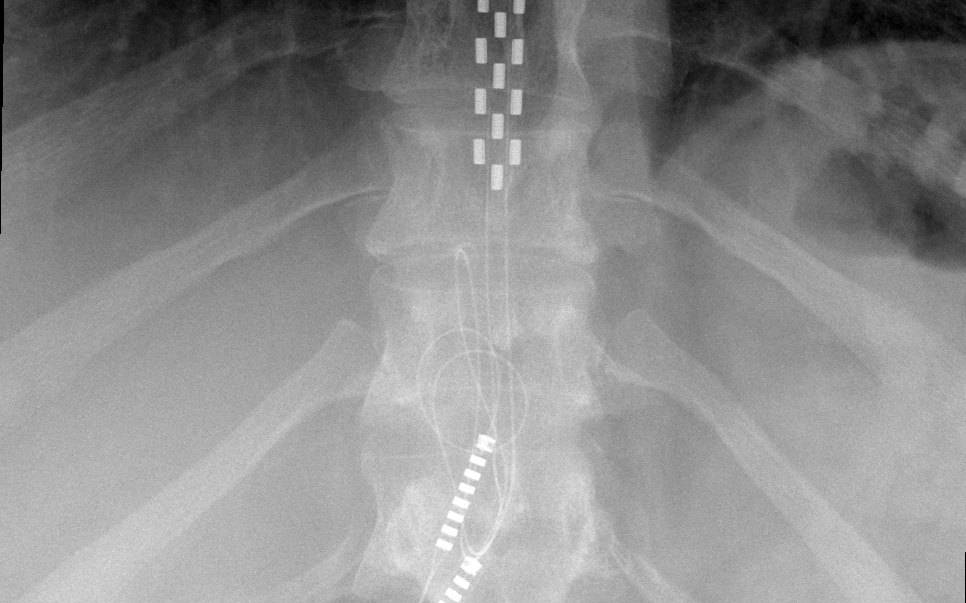
Spinal Cord Stimulation
Electrodes over the lower cord, switched on during training, have let some paralyzed volunteers stand and take steps.
- 02
Inhibitory Neurons
The brain's brake cells, their work in hearing, and a recent finding that the brake can push.
- 03
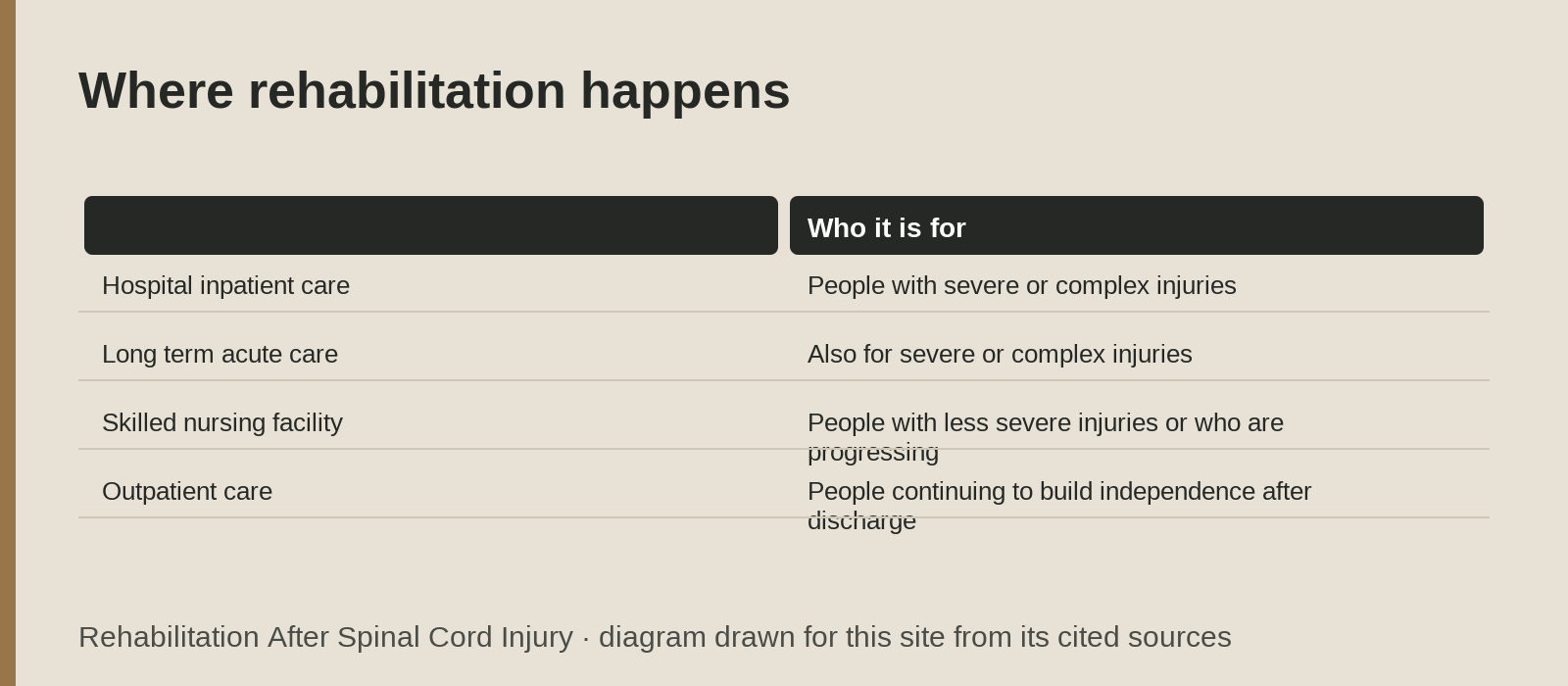
Rehabilitation After Spinal Cord Injury
Therapists, exoskeletons, stimulation trials and September campaigns, and the long stretch of living with a cord injury.


